Electrostatic Powder Gun
Professional-grade application gun
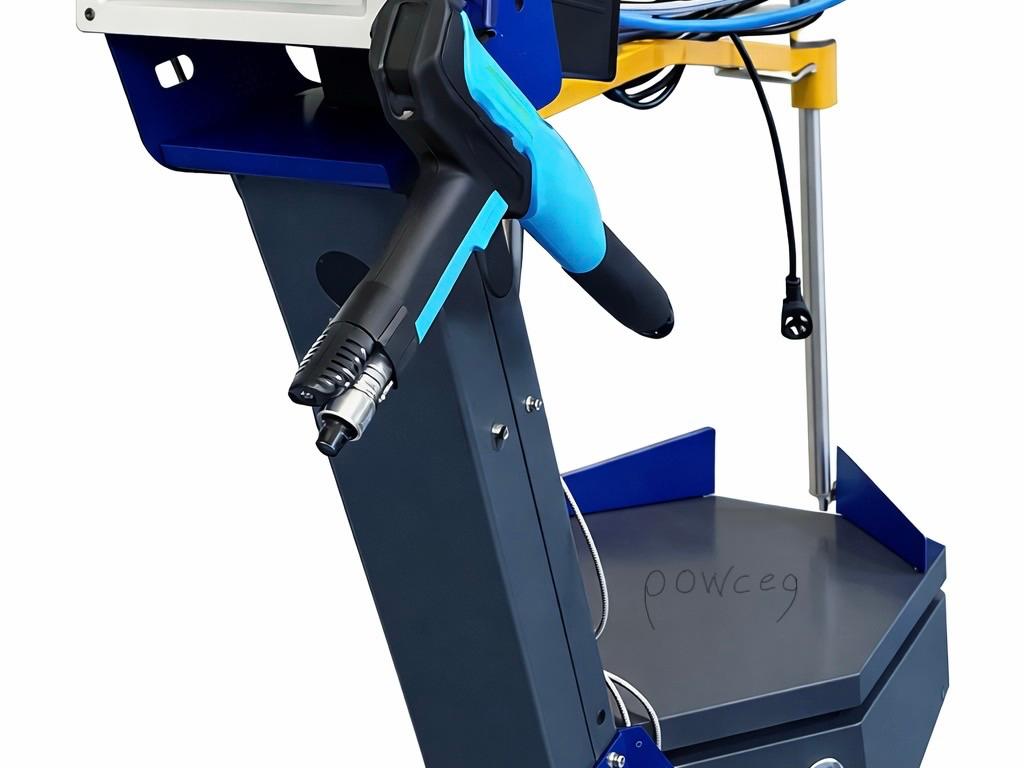
The PowCEQ Electrostatic Powder Gun is a hand-held electrostatic powder coating gun built for manual application, touch-up work, and small-batch production where an operator needs direct control over the spray. It suits custom shops, fabrication and repair operations, and production lines that need a reliable manual station alongside automated equipment. The corona design charges dry powder as it leaves the nozzle, so it clings to grounded parts and wraps around edges before curing. This is the tool for finishers who coat varied geometry by hand and want consistent transfer efficiency without committing to a fixed automatic setup.
Output and core specifications
The gun runs an adjustable 0-100 kV charging field and delivers powder at up to 450 g/min, which covers everything from fine detail passes to laying down full coverage on large panels. At 1.3 lbs (590 g), it stays light enough for long shifts without operator fatigue, and the 10 ft (3 m) hose gives enough reach to walk around medium and large parts without repositioning the powder source. The voltage range is the key working parameter: lower settings reduce back-ionization and the orange-peel texture it causes on already-coated areas, while higher settings drive deeper penetration into recesses and Faraday-cage zones. Those four numbers define the practical envelope, and they hold up across the part sizes a manual station typically handles.
How corona charging works here
Corona charging applies a high-voltage field at the electrode, ionizing the air at the nozzle so powder particles pick up a charge on their way to the part. The charged cloud follows the electric field to grounded metal and builds an even layer, with wrap-around that pulls powder onto back faces and edges. This is the dominant method for general-purpose manual coating because it handles most thermoset powders and most part shapes without special tuning. Corona is one of two charging approaches, the other being tribo (friction) charging, and the trade-offs matter for deep recesses and certain metallic powders. Our guide on choosing an electrostatic powder coating gun, Corona vs Tribo, walks through where each method wins so you can match the gun to your parts and powder chemistry.
Operator control and adjustment
Control comes down to two live adjustments the operator manages at the part: charging voltage and powder output. Dialing voltage down near edges and pre-coated zones limits back-ionization, while raising it restores wrap into recessed geometry. Output flow lets the operator throttle from a thin detail pass to fast full-panel coverage without swapping tips or stopping the gun. Because the unit is hand-held and light, the operator can adjust angle and distance in real time to keep film build even across changing surfaces, which is exactly where manual application earns its place against fixed automatic guns. The result is repeatable finishes on mixed work where part geometry changes from one piece to the next and a programmed reciprocator would struggle.
Integration and compatibility
The gun works with standard dry thermoset powders (epoxy, polyester, epoxy-polyester hybrid, polyurethane) and connects to a powder supply via the supplied 10 ft (3 m) hose. It needs a grounded part and a clean compressed-air feed to run cleanly, and it slots into a spray booth for overspray containment and powder reclaim. As a manual station, it pairs with automatic guns on the same line: operators handle complex parts and touch-ups by hand while reciprocators cover flat, repetitive surfaces. Proper grounding and consistent air pressure are the two prerequisites that most affect finish quality, and both are straightforward to provide in any shop already running powder equipment.
Where it fits in your line
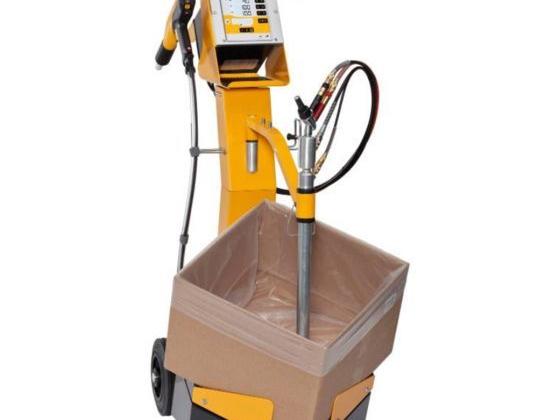
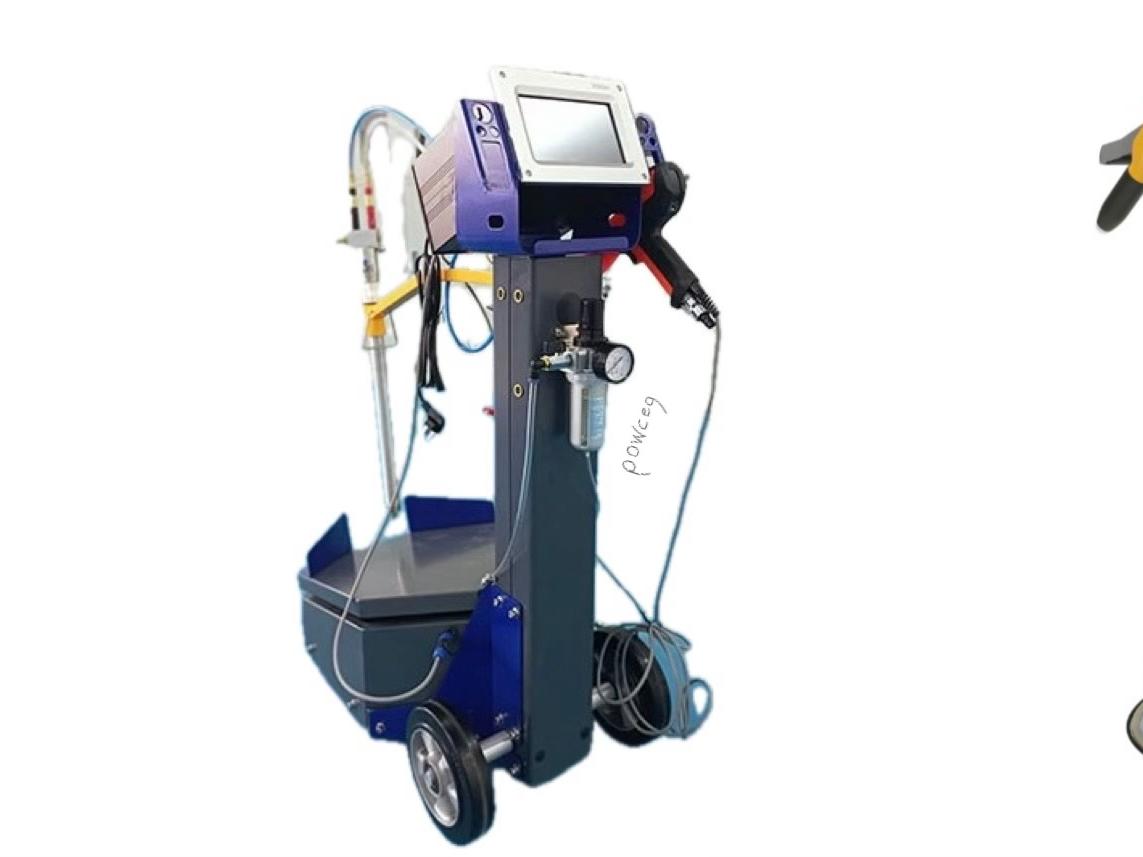
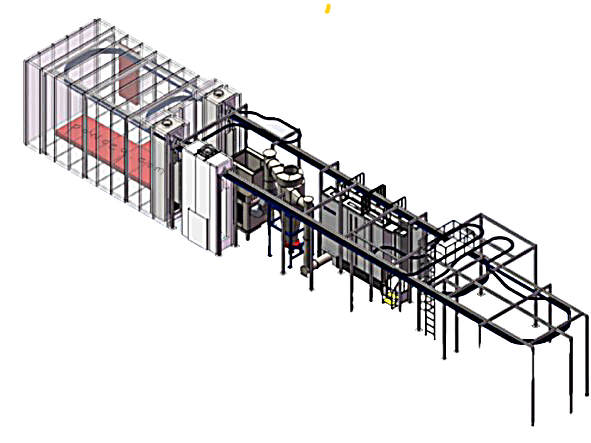
In a full PowCEQ coating line, this gun is the application step that sits between surface prep and cure. Upstream, parts move through pretreatment for cleaning and conversion coating, then dry before they reach the booth. The gun itself operates inside a coating booth that captures overspray, and it draws from a powder feed center that keeps supply consistent and supports reclaim. Downstream, coated parts travel into a curing oven to melt and crosslink the film into a durable finish. An overhead conveyor ties these stages together for continuous throughput, carrying parts from pretreatment through the booth to the oven. As a manual spray gun, this unit complements automatic spray guns on the same line, covering the complex parts, touch-ups, and short runs that automation does not handle well.
Price on request
Contact to place order
Specifications
- Voltage
- 0-100kV adjustable
- Output
- Up to 450 g/min
- Hose Length
- 3m
- Weight
- 590g
Key Features
- 100kV electrostatic charge
- Digital charge control
- Multiple nozzle options
- Lightweight ergonomic design
Interested in the Electrostatic Powder Gun?
Contact our engineering team with your requirements. We respond within 1 business day.