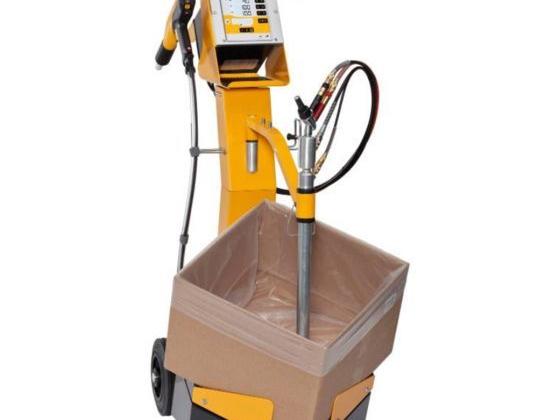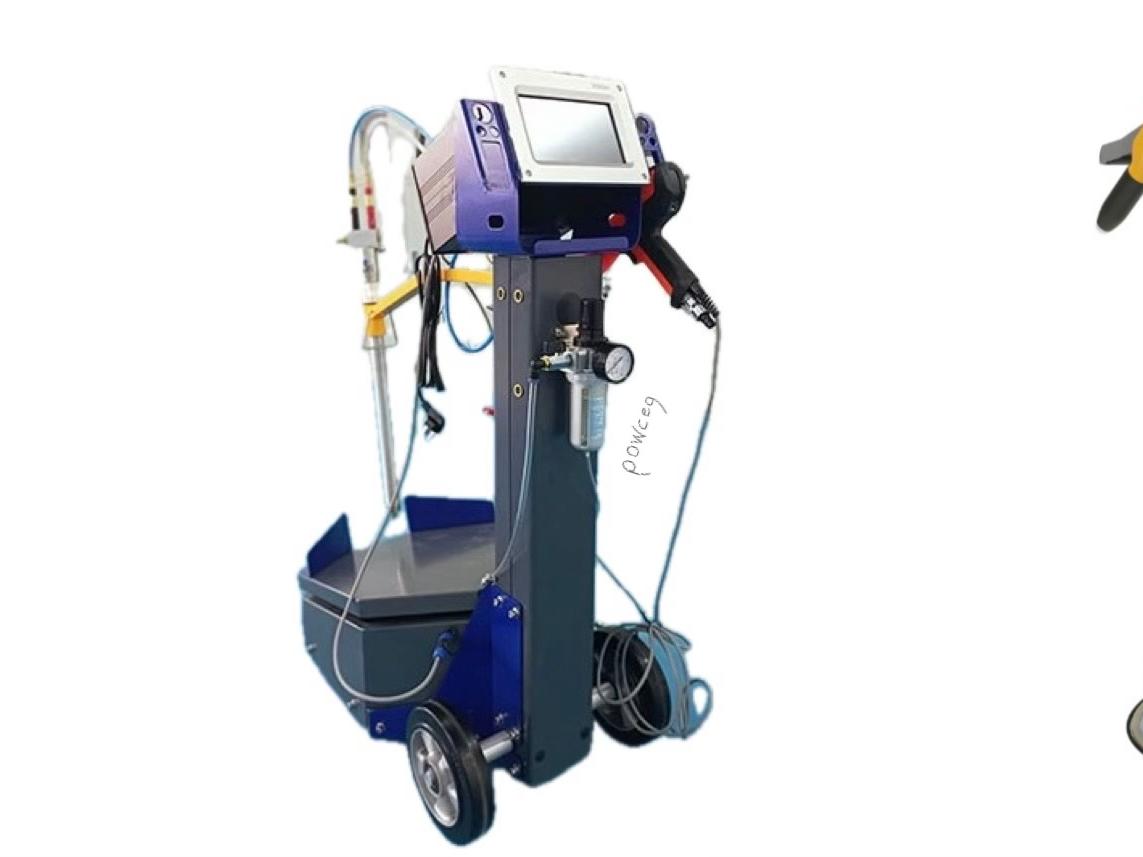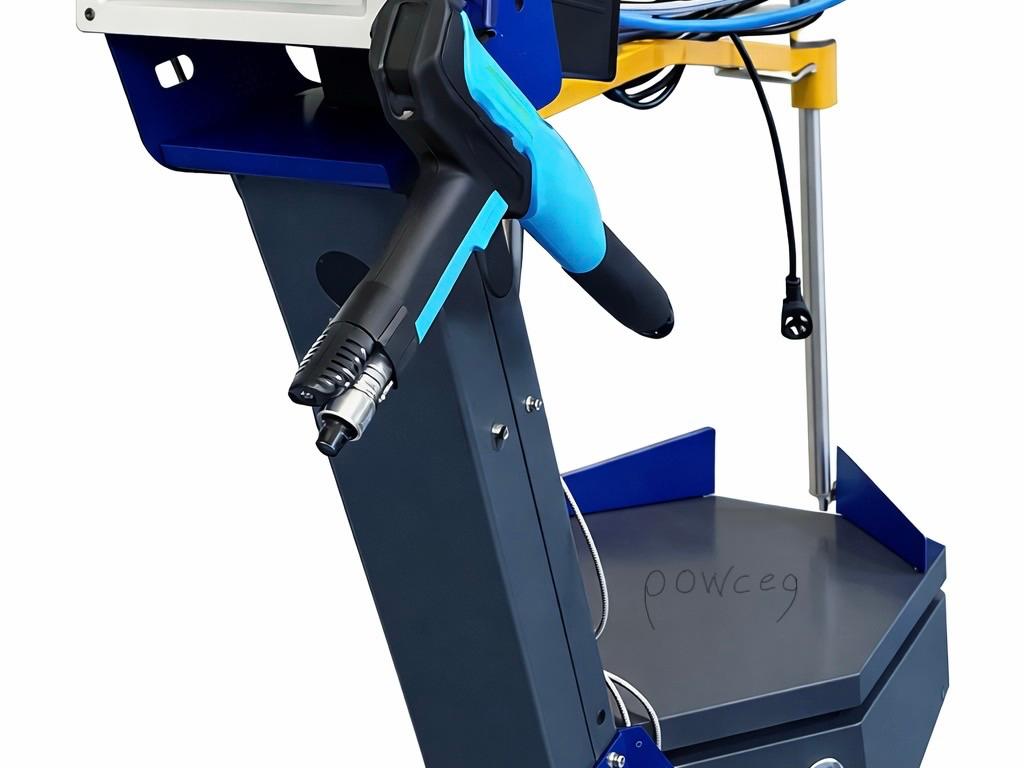
Manual Powder Coating Spray Gun (PCC)
Manual hand spray gun with automatic charging voltage control (PCC)
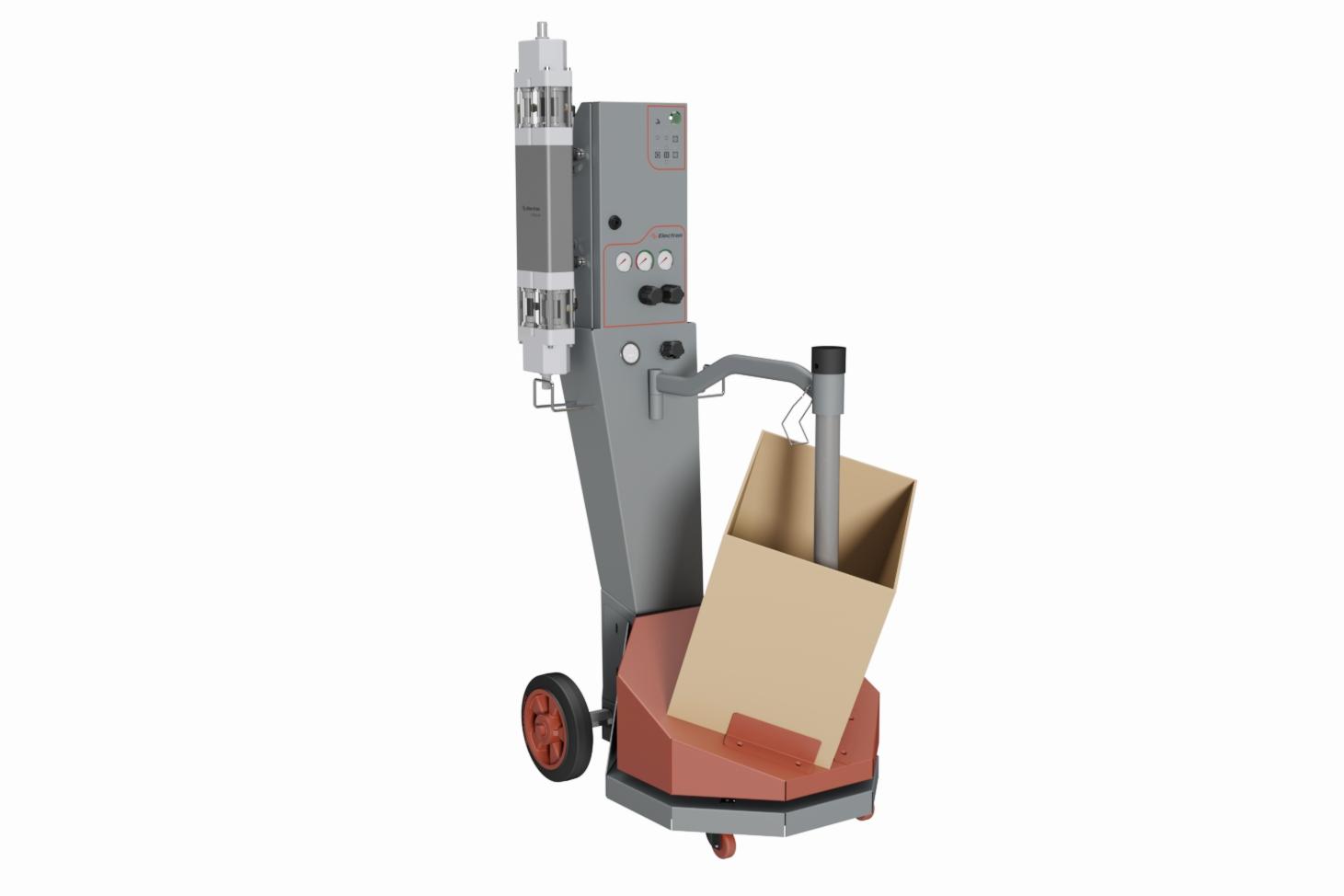
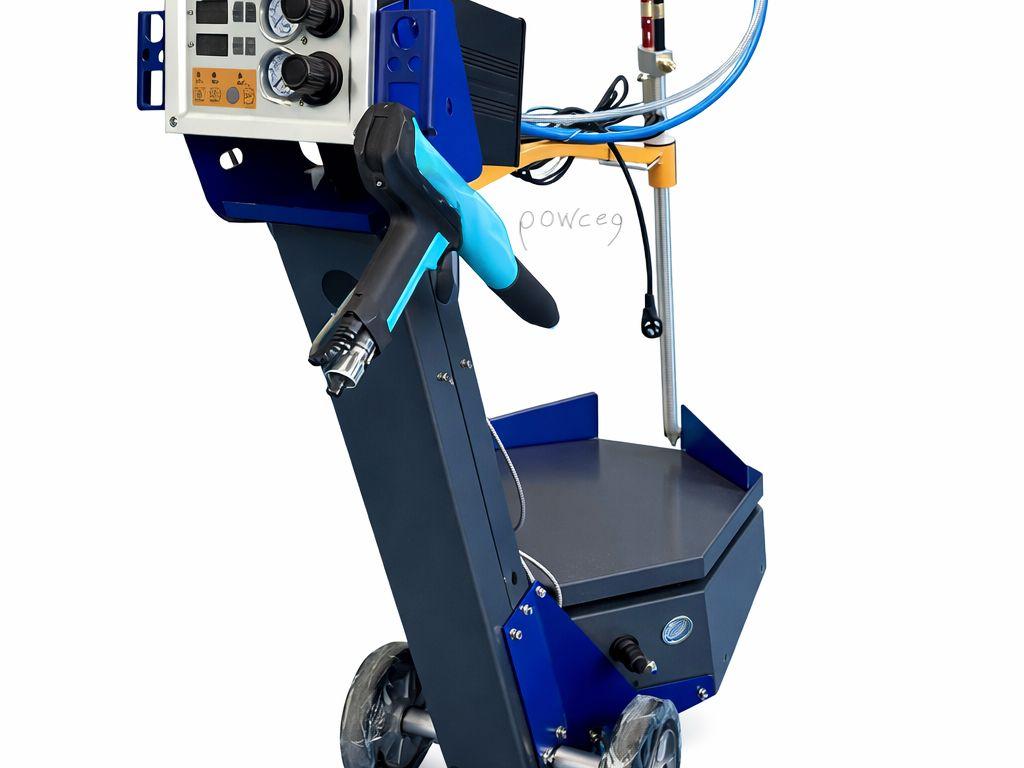
The Manual Powder Coating Spray Gun (PCC) is a hand-held manual powder coating gun built for operators who run varied work through a single station: racks of brackets one hour, complex weldments or fabricated assemblies the next. It is aimed at custom shops, job coaters, and in-house finishing lines that need consistent film build without an operator stopping to retune voltage for every part shape. The defining feature is automatic charging voltage control (PCC), which reads the part and the gun-to-substrate distance and sets the charge for you, so the person holding the gun spends their attention on coverage and pattern rather than on dialing in kV by trial and error.
Output and powder handling
This is a corona-style electrostatic gun fed from an injector and powder hopper, designed for the medium-throughput hand work that makes up most job-shop volume. It runs the standard thermoset powders used across general metal finishing: epoxy, polyester, epoxy-polyester hybrid, and polyurethane. Flow rate, fan pattern, and electrode position are set at the gun and pump so a single operator can move from light touch-up to full panel coverage without swapping hardware. Because charge regulation is handled by the PCC logic rather than a fixed voltage setting, the gun holds an even powder cloud whether the operator is reaching into a deep box section or laying a flat coat across a sheet-metal panel, which keeps mil thickness predictable batch to batch.
How PCC charging works
Conventional corona guns run at a fixed high voltage, which puts a heavy ion stream into recesses and corners. That excess charge builds up in tight geometry and triggers back-ionization: the powder already deposited starts repelling incoming powder, leaving the pinholes, orange peel, and thin spots that show up in Faraday-cage areas. PCC adjusts charging voltage continuously based on what the gun sees, easing off as the operator works into recesses and raising charge on open flats. The result is less back-ionization in channels, weld seams, and inside corners, and a more uniform film across parts that mix flat and complex surfaces. If you are weighing this approach against a tribo gun, our guide on choosing an electrostatic powder coating gun, Corona vs Tribo, walks through where each charging method earns its keep.
Operator control and ergonomics
Control sits at the gun and a panel the operator can reach without leaving the booth. Powder output, air, and the PCC charging mode are adjustable on the fly, and recipes for common part families can be set once and recalled, which shortens changeover and reduces the variation that creeps in when settings are guessed from memory. The gun body is balanced for sustained hand work across a shift, with a trigger and grip sized for repeated cycles. Because the charging logic removes most of the manual voltage tuning, training time for a new operator drops: someone can hold a clean, even pattern early instead of fighting back-ionization while they learn the feel of the gun.
Fit with your booth and recovery
The gun integrates with a standard powder feed setup: hopper or box feed, injector pump, and the compressed-air supply already running in most coating shops. It is built to pair with a manual or batch powder coating booth and the booth's recovery system, so overspray is captured and, where color and powder chemistry allow, reclaimed rather than lost. Grounding is the one site requirement worth stressing: parts must be hung on clean, well-grounded hooks for the electrostatic charge to do its job, and the PCC logic assumes a sound ground path. Within those conditions the gun drops into an existing line without forcing new plumbing or a different powder supply.
Where it fits in your line
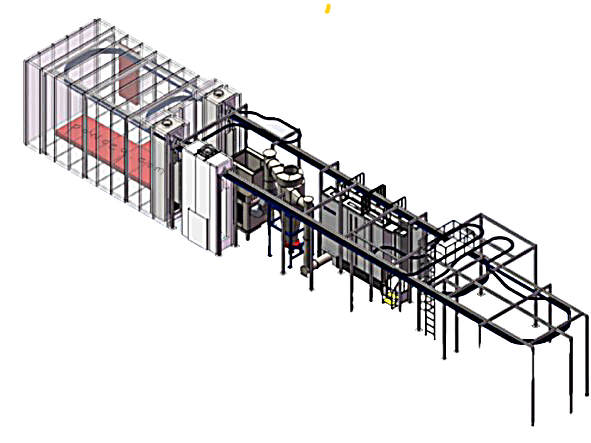
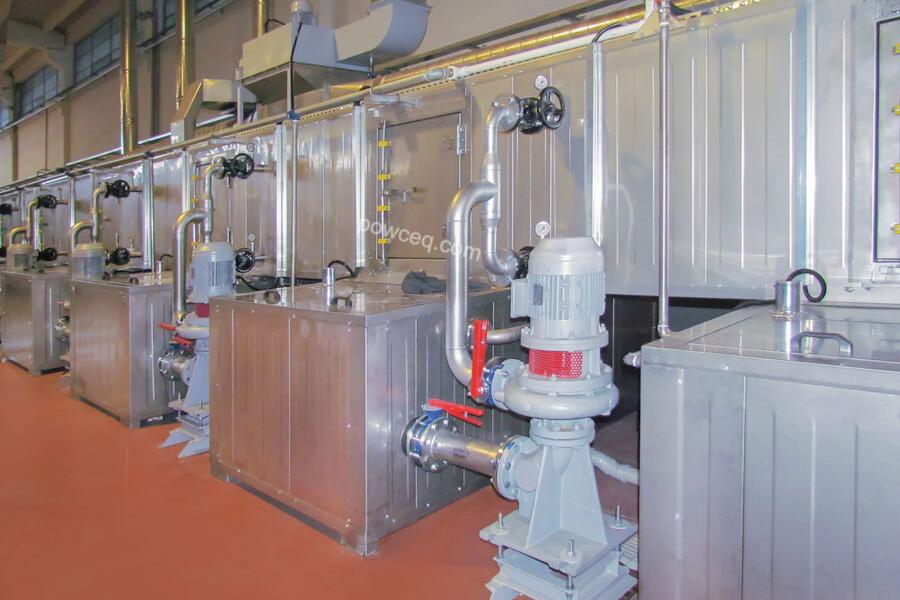
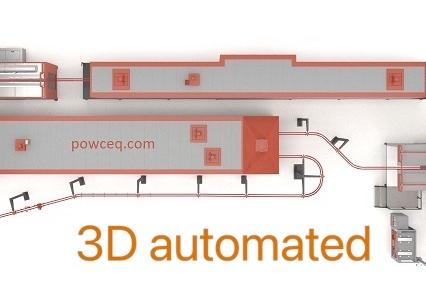
In a full coating line the manual gun sits at the application stage, after pretreatment and drying and before cure. Parts move through a PowCEQ pretreatment system to clean and prepare the surface, then to the powder coating booth where this gun applies the coat. From there parts travel to a curing oven to crosslink the film, often carried by an overhead conveyor that links wash, spray, and cure into one pass. For higher or steadier volume, this manual gun pairs naturally with automatic guns on reciprocators for the bulk of a part and a hand gun for touch-in and complex areas, both fed from a shared powder feed center. Talk to us about matching the booth size, oven capacity, and conveyor speed to your part mix so the application stage is balanced against everything upstream and down.
Key Features
- Automatic charging voltage regulation (PCC)
- Tool-free nozzle changes
- ATEX-2022 certified
- Ergonomic grip and balanced trigger
- Compatible quick-clean module (optional)
- Corona ring available (optional)
Applications
Ready to discuss your project?
Contact our engineering team with your requirements. We respond within 1 business day.