建築用アルミ向け前処理システムのサイジング方法
ステージ数、薬液、槽容量、生産能力。Qualicoat認証のアルミ形材生産に向けた前処理システムを定義する四つの判断。プラント技術者のための実用仕様書です。
前処理は、建築用アルミの粉体塗装の耐久性を決める最大の要因です。炉の曲線よりも、塗装の均一性よりも、粉体の配合そのものよりも重要です。不適切に下地処理された表面に塗装された形材は、何を吹き付けようとも促進耐候性試験で不合格になります。適切に調整された表面に塗装された形材は、20年の使用を経てもQualicoat Seaside Classに合格します。
本ガイドでは、アルミ形材生産向けの前処理システムを定義する4つの決定事項を解説します。工程数、薬品の選定、槽容量と滞留時間、そしてスループットの整合です。PowCEQのエンジニアリングチームが実務で用いる仕様シート、すなわちお客様向けに前処理ラインを見積もる際に使うのと同じワークシートを用います。
前処理の流れ、工程ごとに
アルミの前処理シーケンスは、4つのことを順に行うよう設計された一連の化学処理工程とリンス工程です。汚染物質を除去し、表面を制御されたあらさにエッチングし、粉体を金属に結合させる化成皮膜を析出させ、乾燥前に残留物を除去します。どの工程も、それを取り除くと下流で測定可能な不具合を引き起こすからこそ存在しています。
建築用アルミに必要な最小限のシーケンスは5工程です。
- アルカリ脱脂:機械加工油、引き抜き潤滑剤、取り扱い時の指紋を除去します。通常50〜60 °C、滞留時間2〜4分。
- リンス1:脱脂剤の残留物がエッチング工程を汚染する前に洗い流すためのカスケード水洗。
- 化学エッチング/化成処理:制御された金属除去と化成皮膜の析出。薬品はさまざまです(次節を参照)。
- リンス2:水道水または再生リンス水でエッチング薬品を除去します。
- 脱イオン水リンス:DI水(導電率30 µS/cm未満)による最終リンスで、ウォータースポットを防ぎ、塩化物汚染がないことを確実にします。
6〜8工程のシーケンスでは、脱脂前のプレリンス(薬品の寿命を延ばす)、アルカリエッチング後の酸中和(スマットを防ぐ)、そして沿岸部や高湿度の仕様向けの追加DIリンスが加わります。8工程構成は、お客様がQualicoat Seaside Classまたは20年以上の保証付きAAMA 2605を目標とする場合に当社が納入するものです。
薬品の選定:クロムかクロムフリーか
アルミの化成処理には、現在3つの薬品系統が商業的に使われています。
クロメート(六価または三価)
従来からの標準です。六価クロメート(Cr⁶⁺)はEUのREACHにより禁止されました。三価(Cr³⁺)は依然として許可されていますが、規制圧力にさらされています。黄色から金色の化成層を形成し、塗料との密着性と耐食性に優れます。認証がクロメート薬品を明示的に要求する場合に使われます。一部の防衛・船舶仕様では今なお要求しています。
チタン/ジルコニウムのナノテクノロジー
新規ラインの現代における標準です。Ti/Zrフッ化物錯体により厚さおよそ50〜200 nmの透明な化成層を析出させます。正しく施工すればAAMA 2605およびQualicoat Class 2/Seasideを満たします。動作温度がより低く(クロメートの55 °Cに対し30〜45 °C)、滞留時間が短く、必要なリンス工程も少なくて済みます。これが当社が新規自動ラインで標準的に指定するものです。
亜鉛/鉄リン酸塩
鋼では標準ですが、建築用アルミには適しません。リン酸塩化成皮膜は、外装アルミファサードに求められる耐候性能を満たしません。ナノテクノロジーまたはクロメートを使ってください。鉄リン酸塩は一般的な鋼製品の製作には問題ありません。当社では、両方の薬品を異なる槽群で処理するハイブリッドラインを納入することもよくあります。
槽容量、滞留時間、スプレー圧力
工程数と薬品が決まれば、槽の形状は2つの変数から導かれます。スループットと滞留時間です。縦型または横型ラインを通るアルミ形材の場合、実務上の計算式は次のとおりです。
槽長(m)=ライン速度(m/分)× 滞留時間(分)+ 移行余裕(0.3 m)
2 m/分で3分間の脱脂滞留を行うラインには、長さ6.3メートルの脱脂槽が必要です(加えて入口/出口の飛沫ガードも)。5 m/分のラインには15.3メートルが必要です。高スループットラインが控えめなラインに比べて不釣り合いに高価になるのはこのためです。槽の形状はライン速度に比例して大きくなり、スプレーバンクごとに専用のポンプ、フィルター、ヒーター、薬品計量装置が必要になります。
スプレー圧力は目立ちませんが、同じくらい重要です。標準的なアルミ前処理はノズルで1.0〜1.5 barで運転します。圧力が低すぎる(0.8 bar未満)と、形材の内部チャンバーに残留物が残ります。圧力が高すぎる(2.0 bar超)と、オーバースプレーで薬品を浪費し、ポンプでキャビテーションを起こす恐れがあります。当社では公称1.2 barに20%の余裕を見てポンプを選定します。
加熱負荷は、槽容量に蒸発損失と放射損失を加えた値に比例します。50〜55 °Cの加熱薬品を合計25 m³使う5槽ラインの場合、起動時にはおよそ350〜500 kWの連続的な熱需要を見込み、定常運転中は150〜250 kWに落ち着きます。
スループットの整合:最も重要な唯一の決定
粉体塗装ラインにおいて、スループット目標ほど設備投資と運用経済性を左右するものは他にありません。ラインを過大にすれば、空運転で資本とエネルギーを浪費します。過小にすれば、工場全体のボトルネックになります。
建築用アルミの場合、目安となるスループットの段階は次のとおりです。
- 小規模:1日あたり形材表面積500〜1,500 m²。ライン速度1〜2 m/分。5工程の浸漬式またはスプレー式、3 mの槽、オペレーター1名。設備投資はおよそ40万〜80万ユーロ。
- 中規模:1日1,500〜4,000 m²。2〜3.5 m/分。7工程のスプレーライン、8〜10 mの槽、自動薬品計量。設備投資100万〜200万ユーロ。
- 大規模:1日4,000〜10,000 m²。3.5〜5 m/分。8工程のスプレーライン、15 m以上の槽、閉ループDI水回収、レシピ管理付きPLC。設備投資250万〜500万ユーロ。
これらの区分は、当社がアルミ形材塗装ラインの提案で見積もるサイジング段階に対応しています。中規模から大規模への移行は、単に槽が大きくなるだけではありません。自動化、回収、コンプライアンスの余裕という点で根本的に異なるレベルです。
よくあるサイジングの誤り
EU、US、GCCにおける15年間のライン据付経験から、最も頻繁に見られる4つのサイジングの誤りは次のとおりです。
- 持続スループットではなくピークスループットに合わせてサイジングすること。 通常の日に500 m²、ピーク時に2,000 m²を処理する工場は、ピークの2,000 m²ではなく、持続的な1,200 m²に合わせてサイジングすべきです。ピークに合わせたラインは70%の時間を空運転で過ごし、その薬品は過剰使用ではなく使用不足で劣化します。
- 資本を節約するためにDIリンスを省くこと。 DIリンスはライン上で最も安価な工程(リンス槽1基、循環ポンプ1台、DI仕上げ装置1台)であり、沿岸部のアルミにおいて、5年もつ塗装と20年もつ塗装とを分けるものです。決して省かないでください。
- ガス式ラインで加熱能力を過小にすること。 ガスバーナーは公称出力は高いものの、応答時間が遅いです。定常運転250 kW向けに選定したバーナーは、月曜朝のコールドスタートで薬品を所定の温度まで上げるのに90分かかります。当日中の準備完了のためには、比例制御バーナーで400 kWに合わせてください。
- 同一ラインでクロムとクロムフリーを混在させること。 槽間の持ち出し汚染により、どちらの仕様にも合格させるのが難しくなります。一方の薬品だけを使ってください。異なる顧客向けに両方を運用しなければならない場合は、並列のラインを納入してください。
次のステップ
新しい前処理ラインの仕様を策定する場合も、既存ラインをアップグレードする場合も、正しい順序はこうです。まずスループット目標を定め、次に薬品系統を選び、それから滞留時間と槽の形状を計算で導きます。競合他社の見積もりから始める誘惑は避けてください。形材の形状、市場、薬品の組み合わせのそれぞれによって、最適な形状は異なります。
PowCEQは、スイス、米国、UAEの各拠点から、完全な自動粉体塗装システムの一部として前処理ラインを納入しています。御社の具体的なスループット目標についてサイジングワークシートの計算を当社に依頼されたい場合は、生産数値を添えてご連絡ください。1営業日以内に構成提案をお返しします。
関連記事
コロナ式とトリボ式:静電粉体塗装ガンの選び方
粉体塗装ガンの基本となる二つの技術、コロナ式(高電圧イオン化)とトリボ式(摩擦帯電)。それぞれが得意とする場面、苦手とする場面、そして量産現場での選び方を解説します。
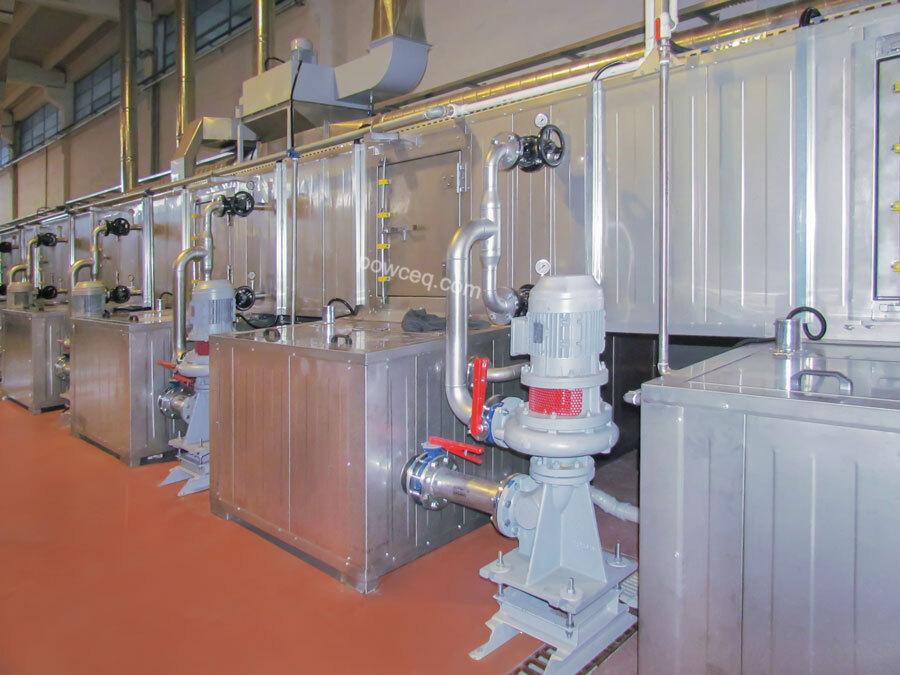
工業用粉体塗装焼付炉のサイジング:生産技術者のための手引き
生産能力に合わせて商業用・工業用の粉体塗装焼付炉をサイジングする方法。内容積、熱容量、焼付時間、加熱能力、気流を取り上げます。プラント技術者のための実用リファレンスです。
低温硬化MDF粉体塗装:家具メーカー向けプロセス仕様
MDF・木材の粉体塗装に向けた、低温硬化粉体の特性、予熱戦略、絶縁性素材の取り扱い、ライン構成。家具・キャビネットメーカーのための完全なプロセス仕様です。